
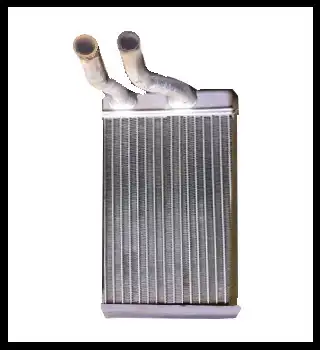

How to Replace the Heater Core
I’ve been working on cars for twenty-plus years, and nothing, I mean nothing, was easier to install than the heater core on the 1993 Ford Explorer. I would say a child could install it!
Bypass The Heater Core
If you’re short on time or just want the leaking of radiator fluid to stop, you can bypass the heater core.
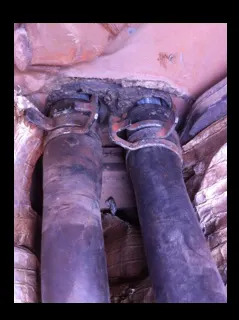
To bypass the heater core, under the hood, on the passenger side, against the firewall, there are two hoses, parallel to each other. These are the heater core hoses.
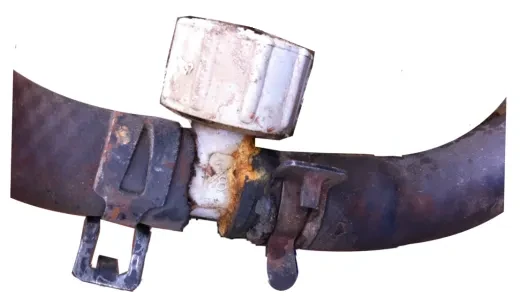
You’re going to need a piece of connecting hose. Cut each hose near the firewall but don’t cut the metal the hose is slid onto. You can leave the hose clamps and couple of inches of hose on the firewall stubs.
Now, using your connecting hose, connect the two hoses to each other. Like this…
This is a temporary “fix”. You have bypassed the heater core. Just remember, when Winter comes around, you will have NO heat, no defrosters, nothing to warm the vehicle or clear the windows. You will have the blower but that won’t help.
What Is the Heater Core?
Follow along with the directions and pictures below, and let’s replace the heater core properly. You’ll be roasting in no time.
The heater core is like a miniature radiator. The coolant from the engine flows through it as part of the cooling system.
First, the coolant in a warm engine flows through the engine, absorbing the heat.
Second, the hot coolant is diverted through the firewall into the heater core in the passenger area below the dashboard.
Third, when the heater is activated, a fan blows air across the heater core, causing the warmth from the coolant, heated by the engine, to disperse into the cabin of the vehicle.
Last, the coolant flows out of the heater core, back through the firewall, and to the radiator for additional cooling through the radiator and radiator fan.
When a vehicle is having an overheating issue, it can sometimes help to turn the heater on high. The heater running on high helps the engine take the heat out of the coolant. Running the heater won’t fix an overheating issue, but it may buy you some time to get to a service station or safe exit.
How to Determine if It’s Causing Your Problem
Is the heater core the problem? Before purchasing or removing parts, you’ll want to be sure that it is indeed the heater core that is the problem.
Fortunately, the heater core provides several indicators when it is going bad. Here are the indicators in the order in which you might see them.
- Early on, the windshield starts to collect mist on the inside. This mist will get worse as the core goes bad. At first, it will be noticeable near the dashboard, where the heater vents for the defroster emerge, and as time passes, the damp area will slowly rise up the windshield.
- When the core starts to go bad, you will notice the cotton-candy odor of radiator fluid or a smell of boiling water in the cabin of the vehicle.
- The floorboard of the vehicle on the passenger side will be wet.
- Finally, the heater will turn on, but no heat will come out of the vents.
Let’s Remove the Core
Only work on the cooling system when it is cool. If it’s warm, or hot, the coolant can burn you, and built-up pressure can spray it all over you.
1. Remove the two hoses under the hood, at the firewall, attached to the heater core pipes that are protruding through the firewall.
2. Inside, on the passenger side, below the glove box, look for a black plastic cover with four screws in it, Remove the four screws. (There may be a decorative cover that would need to be removed first.)
3. The plastic piece will drop down. Slide it outwards to allow the drainpipe, going through the firewall, to come through.
4. You should be able to see the bottom of the heater core at this point. Pull the core down while pushing towards the wall. An assistant, if you have one, can go under the hood and push the pipes towards you through the firewall.
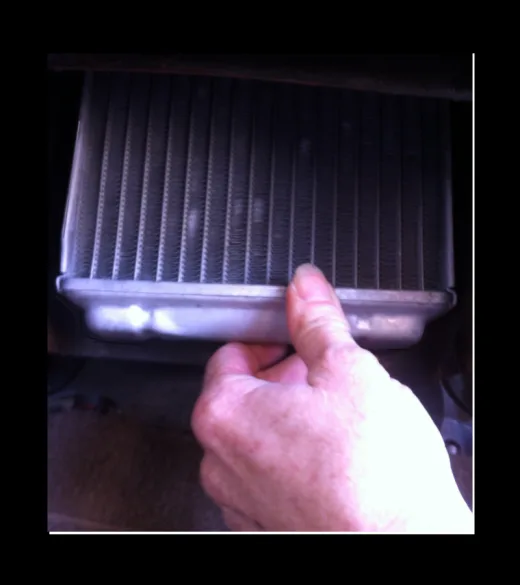
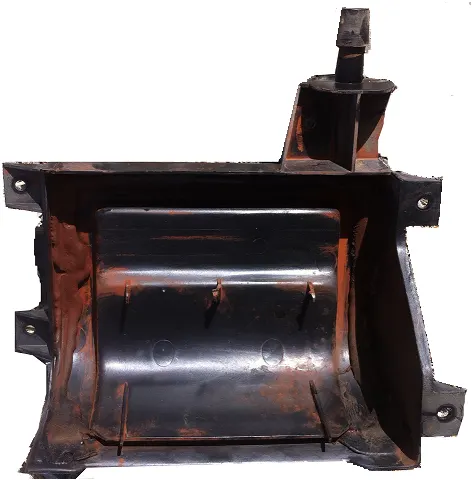
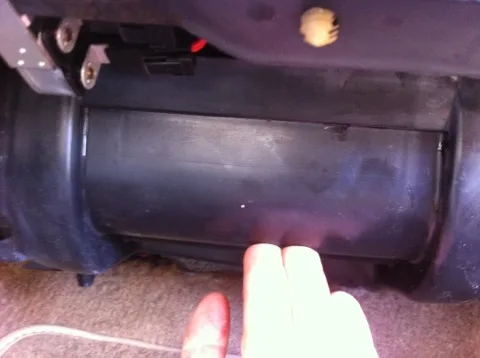
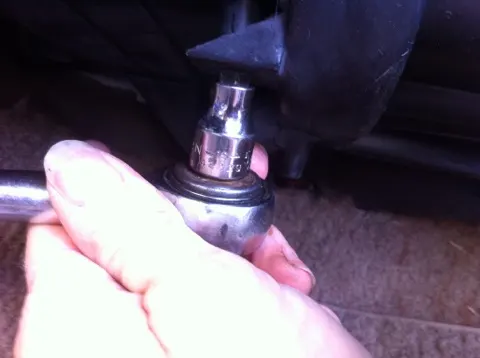
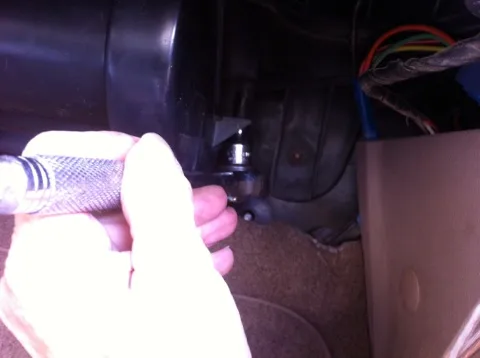
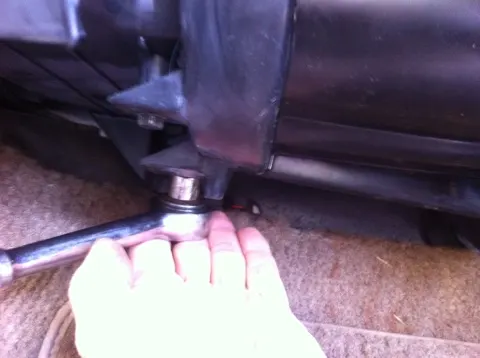
And you’ve removed the heater core! Now let’s put it back in.
Put It Back Together
There may be insulation on the heater core you removed. If possible, transfer it to the new core. If it can’t be removed, pick some padding up at the hardware store and attach it to the new one the way it was on the old one (this is not imperative; it’s just padding).
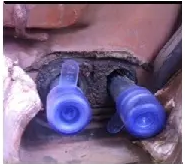
- Take the new heater core and slide it up where the old one was. Again, use an assistant to guide the pipes through the firewall if it will help. It can be difficult to line up the holes and push the pipes through at the same time.
- Once the pipes are through, working under the hood, attach the pipes to the hoses. It helps to hold the heater core in place.
- Now put the plastic piece back on and screw in the four screws you took out earlier.
- If there was a decorative cover, replace that, too.
- Open the radiator cap and top off the fluid that escaped when you took the hoses off.
- Start the engine and look for leaks at the firewall connection.
Job well done!!