
Symptoms of Mouth Ulcers in Horses
If you are concerned that your horse may have oral ulcers, there are clear symptoms to look for:
- Your horse is interested at feeding time yet stops eating soon after he starts.
- The horse’s mouth hangs slightly open, or the lower lip hangs down.
- A very common symptom is drooling!
- There are small piles of uneaten feed near the feeding area.
- The mouth and/or lips are sensitive to touch.
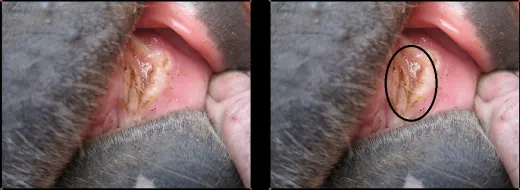
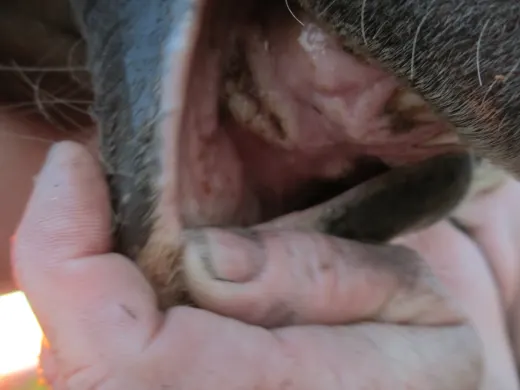
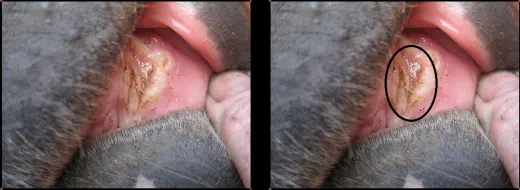
- You can see visible ulcers inside the mouth, especially along the lower lip canal.
Beyond these listed symptoms, you should have a thorough look at the hay your horse is eating. Sometimes you can find the culprit in their hay.
Which Weeds and Grasses Are Dangerous for Horses?
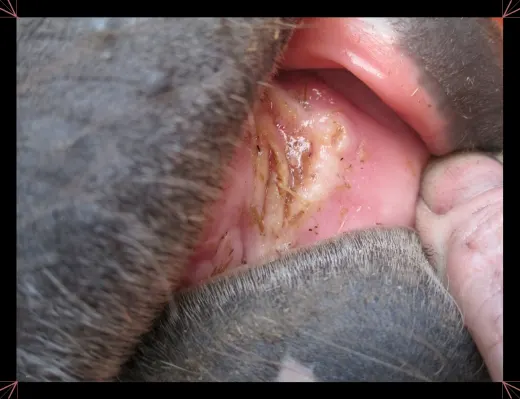
These are the symptoms of ulcers caused by undesirable grasses in hay. When the hay being fed to your horse has an overabundance of undesirable grasses, your horse will develop red, open ulcers in his mouth. These open ulcers will often have the culprit weeds still embedded in them.
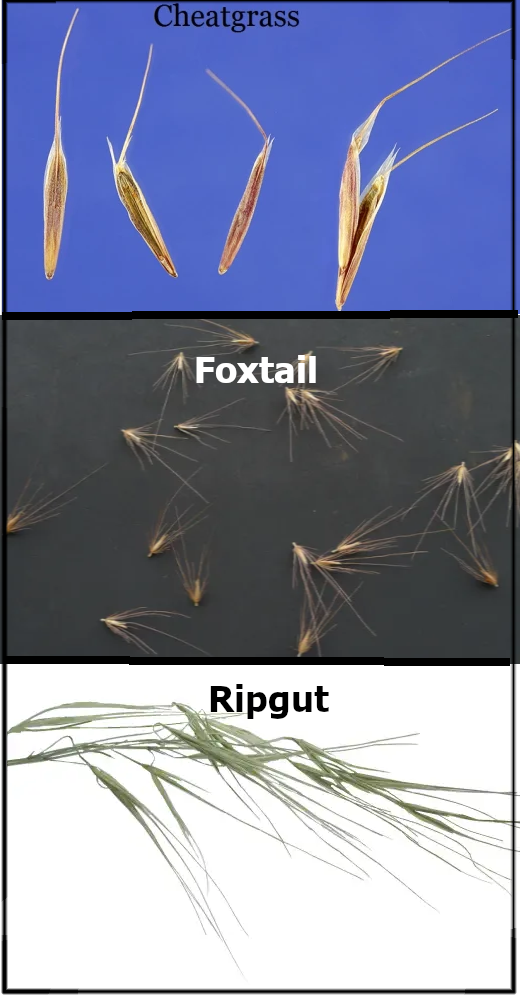
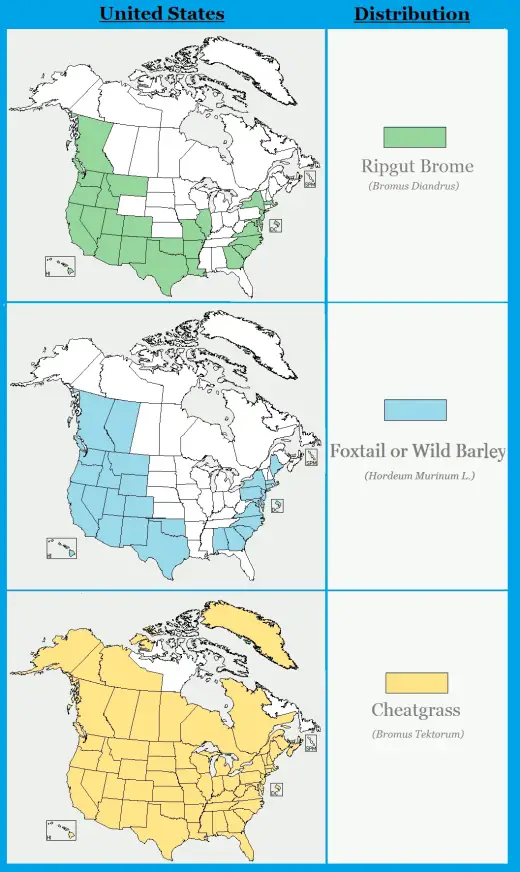
Ripgut (Bromus diandrus), foxtail (Hordeum murinum), and cheatgrass (Bromus tektorum) are just a few common and extremely problematic grasses within the US. There are too many varieties of undesirable grasses to list them all, but these are the most notorious ones, especially the Ripgut, which can even perforate a cow’s gut.
Note: The Ripgut grass was the culprit in our situation, so the photos and videos you find in this article are of that grass.
Why Intervention Is Required
A horse cannot remove these undesirable grasses from their mouth. These grasses have spines on them pointing in one direction: in. When their feed has a lot of them, they build up in the lower lip, piercing the tender flesh, embedding themselves in their lip. Once one has penetrated the flesh, it’s really easy for more to pile into the hole. One after another, as the horse picks up his hay with his lips, the undesirable grasses drop off their spiny arrows, that in turn, they embed themselves into his lips.
The horse will continue to eat until he is in so much discomfort he cannot pick up another mouthful of the hay. At this point, it is too painful to hold his lips together and swallow his saliva. He will then stop eating, stand with his lips apart, drooling profusely. The drool will sometimes extend from his lip all the way to the ground.
Know Your Foxtail Grasses!