

Now that we’ve tackled those Pearly Whites and ensured your dog’s dental health is on track, it’s time to look at the next ‘quiet’ indicator of senior wellness: their resting breath. Just as clean teeth prevent systemic infections, monitoring how your dog breathes while asleep can give you an early warning sign of heart or lung changes. It’s one of the most powerful “Early Warning Systems” you can use at home for your senior dog!
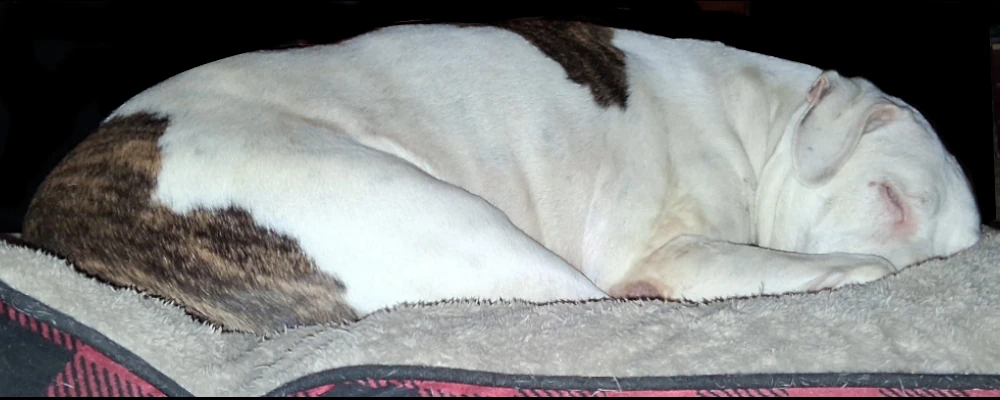
One super easy way to monitor your senior dog’s heart and lung well being is by monitoring their Sleeping Respiratory Rate.
Sleeping Respiratory Rate (SRR)
A normal resting rate is fewer than 30 breaths per minute; catching an increase in your senior dogs SRR can make all the difference for a senior pup.
Preventive Senior Care
In my home I am managing five (5) senior dogs. If I can identify a health issue before it becomes a full blown illness is key. It’s easier to treat an illness when it’s in the early stages, it costs less than a full blown illness and the chance of recovery is much higher. Below are just a few serious illnesses that can benefit your senior dog if they are caught early on:
1. Left-Sided Congestive Heart Failure (CHF)
This is the “big one” for senior dogs. Before a dog starts coughing or fainting, their heart may begin to struggle, causing fluid to slowly back up into the lungs (pulmonary edema).
- The Early Sign: The body compensates for reduced oxygen by breathing faster. An SRR that creeps up from a baseline of 18 to 25, even if it’s still under 30, can signal that heart disease is progressing toward failure.
2. Anemia (Low Red Blood Cell Count)
In senior dogs, anemia can be caused by internal parasites (like hookworms), kidney disease, or even bleeding tumors (like those on the spleen).
- The Early Sign: Because there aren’t enough red blood cells to carry oxygen, the dog has to breathe more frequently to keep the body fueled. If you notice a high SRR combined with pale gums (which you’d see during your “Pearly White” checks), this is a major red flag.
3. Lower Respiratory Diseases
- Pneumonia: Catching an infection early before a fever or heavy lethargy sets in.
- Chronic Bronchitis: Common in older, smaller breeds; tracking SRR helps you know if their “maintenance” is working or if they are having a flare-up.
- Pulmonary Fibrosis: A “scarring” of the lungs often seen in Westies and other senior terriers.
- Collapsing Trachea: Common among Chihuahua’s. If your pup is experiencing the collapsing trachea revert to a “full body harness” for walking. Toss the choke chain immediately!
SRR helps monitor the health of the lungs themselves.
4. Pain or Discomfort
Dogs are masters at hiding pain, but they cannot control their involuntary breathing rate while they sleep.
- The Early Sign: If a dog’s SRR is high but their heart and lungs check out, it often points to silent pain, such as advancing arthritis or abdominal discomfort.
How To Monitor Your Dogs SRR
Using either your phones second timer or a clock makes it easier to focus on counting the breathes while the phone counts the seconds for you.
- Step 1: The “Golden Hour”: Wait until your dog is sound asleep or deeply relaxed, not just after a walk or a meal.
- Step 2: Watch the Rise: One full breath equals one rise and one fall of the chest.
- Step 3: The 30-Second Shortcut: Instead of counting for a full minute, count the breaths for 30 seconds and multiply that number by 2.
- Step 4: Know the Magic Number: A healthy resting rate is consistently under 30 breaths per minute.
Free Download: [Click here to download a Weekly SRR Monitor ] to keep on your fridge or where you find it most convenient for you to record their SRR!
Free App: I built an app to count my seniors dogs breathing and I’m sharing it with you here!